

One Monster, Eight Names

Updated: Sep 13
I want to talk about the thing under the water.
Every nation of Adamah has a story about a great beast in the Endless Sea, and every nation gives it a different name. In Snowfall it is Qalupalik, a legend rooted in Inuit folklore about a creature that takes children who wander too close to the ice. In Penumbra it is Kastoria. Morass calls it the Kraken, and so do the tribes of Champaign, who learned the name from the Raz. In Cape Guard, King Jedidiah favors the Dragon of the Sea and lists it among the gods he worships when his mood turns that way. Ophir calls it Leviathan, the old word from which I took the beast's true name. Betharaba calls it Apep, after the serpent of chaos. In Socho and the Golden West it is Cetus, a whale sent by an angry god to ravage a coastline because a queen boasted of her beauty.
None of these people have compared notes. That is the point. The nations of Adamah are so divided that they have each invented a private name for a shared terror and never once wondered if the neighbor's monster was the same one.
The stories are the best part. In the Black Hills, the Raz chief Banshee paints his face white like a ghost and reads to the children of his tribe. His favorite tale is about a man named Yowden who prayed to Wakan Tanka to end his suffering at sea. The prayer was answered. The Kraken dragged his ship to the depths, and Yowden was cursed to serve the beast forever, because he had begged for the end of a life he was given and received a different one instead. Banshee tells it as a warning about ingratitude. The moral is older than the Raz.
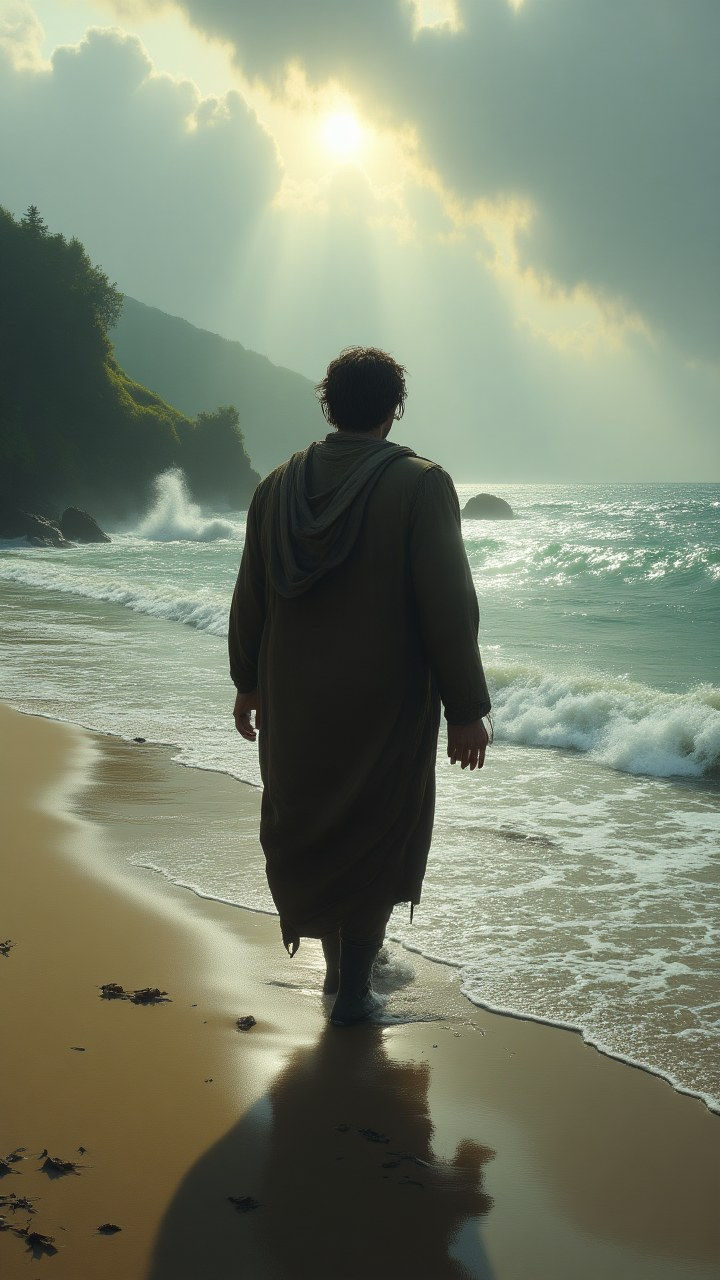
On a beach in the Golden West, two brothers named Shazta and Watson tell a young Socholite soldier the story of the Chained Lady while the three of them lie under the stars. A queen named herself the most beautiful creature in the universe, a god sent Cetus to punish her coast, and her daughter was chained at the seaside to wait for the whale. A hero came from the sea carrying the head of a monster and turned the beast to stone. The soldier, a little drunk and a long way from home, decides he might get his own Perseus one day. The stars they are looking at form a triangle lying on its side, its tip resting on a pillow.
I will say this much about what the beast is. It is not a villain. It has no plan. It is a confirmation that something ancient and real operates beneath the surface of Adamah, not folklore and not metaphor. The devil in this story works through the thoughts of men. The thing under the water is older than that, and it does not care about crowns.
Eight names. One monster. When the nations finally compare notes, that will be its own kind of unity.


Comments